
Teaching young kids English numbers can be fun and engaging with the right tools. A numbers worksheet for kids is a great way to do this. It mixes fun with learning, making it enjoyable and memorable for them.
Worksheets for kids have interactive elements that make learning numbers exciting. They use bright visuals, games, and fun exercises. This keeps young learners interested and curious, helping them to enjoy learning new things.
Key Takeaways
- Numbers worksheets make learning English numbers fun and effective for kids.
- Educational activities for children can be both entertaining and informative.
- Interactive elements in worksheets help keep young learners engaged.
- Combining visuals and games enhances children’s understanding of numbers.
- Engaging and well-designed worksheets foster a love for learning in kids.
Introduction to Learning Numbers in English
Learning English numbers is the first step in a child’s math education. It begins with recognizing numbers and knowing how to say them. Using educational resources for kids makes this early learning fun and effective.
Parents and teachers can help with flashcards and songs. These tools help kids connect the numbers they see with the sounds they hear. Mixing sounds and sights helps them remember better.

Interactive activities are great for teaching English numbers. Kids can count things, play number games, and use apps. These activities help build their confidence and skills in learning numbers.
By focusing on these basics, kids get ready for harder math. Using different educational resources for kids makes learning exciting. It gets them excited about numbers and math.
Benefits of Using Worksheets for Learning Numbers
Worksheets for kids are a great way to teach numbers. They make learning fun and offer many benefits. These benefits help a lot with a child’s cognitive development and active learning. Let’s look at the main advantages of using worksheets in learning.
Enhances Cognitive Skills
Worksheets are key in improving cognitive skills. They help kids solve problems and think logically. Through different activities, they learn to spot patterns, count, and understand numbers.
This hands-on learning makes numbers real in their minds. It’s a big step in their cognitive development.
Promotes Active Learning
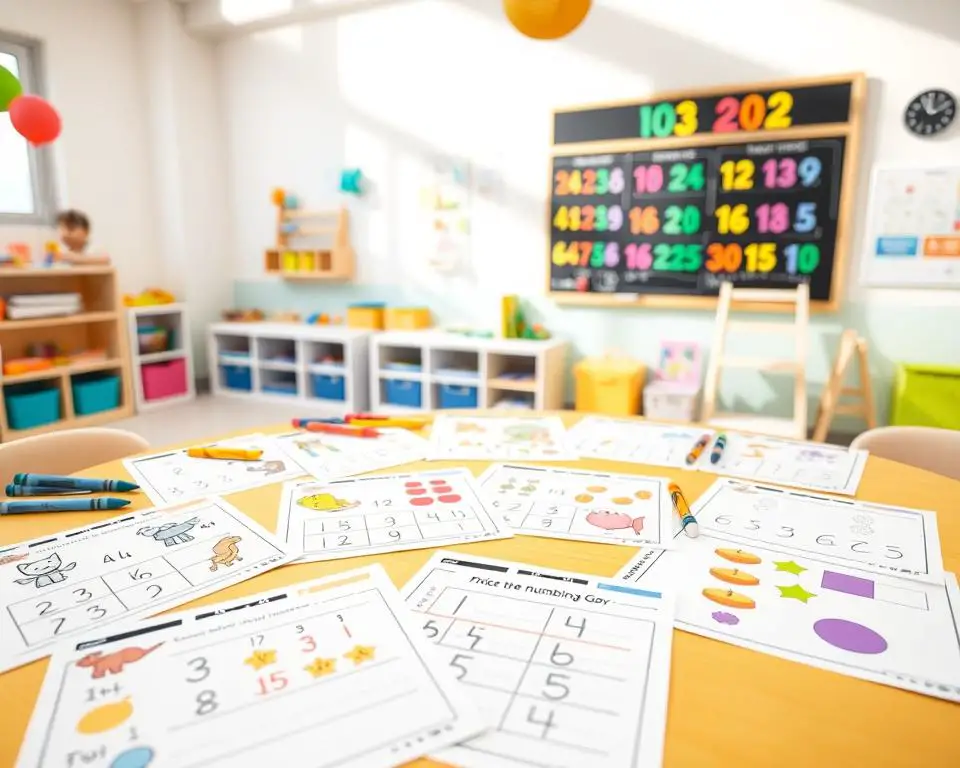
Worksheets also encourage active learning. Kids don’t just sit and listen; they write, draw, and color. This makes learning fun and helps them remember better.
Being active in learning keeps kids focused and excited. It helps them understand numbers better.
Provides Structured Practice
Worksheets also give kids a chance to practice in a structured way. This is key to mastering new skills. They help kids learn numbers step by step.
Each worksheet targets specific skills. This helps kids fill in any gaps in their learning. It makes learning numbers a better experience.
| Benefit | Description |
|---|---|
| Enhances Cognitive Skills | Engages kids in problem-solving and logical thinking. |
| Promotes Active Learning | Encourages hands-on activities that make learning enjoyable and effective. |
| Provides Structured Practice | Offers a systematic approach to reinforce knowledge and skills. |
Fun and Engaging Number Games
Learning numbers can be fun for kids with the right games. Educational games make learning numbers enjoyable and memorable. Tools like audio-visual aids grab their attention and help them remember numbers better.
Using Audio-Visual Aids
Tools like digital flashcards and animated videos make numbers exciting for kids. They use bright colors, catchy tunes, and fun visuals. This makes learning numbers a fun experience for them.
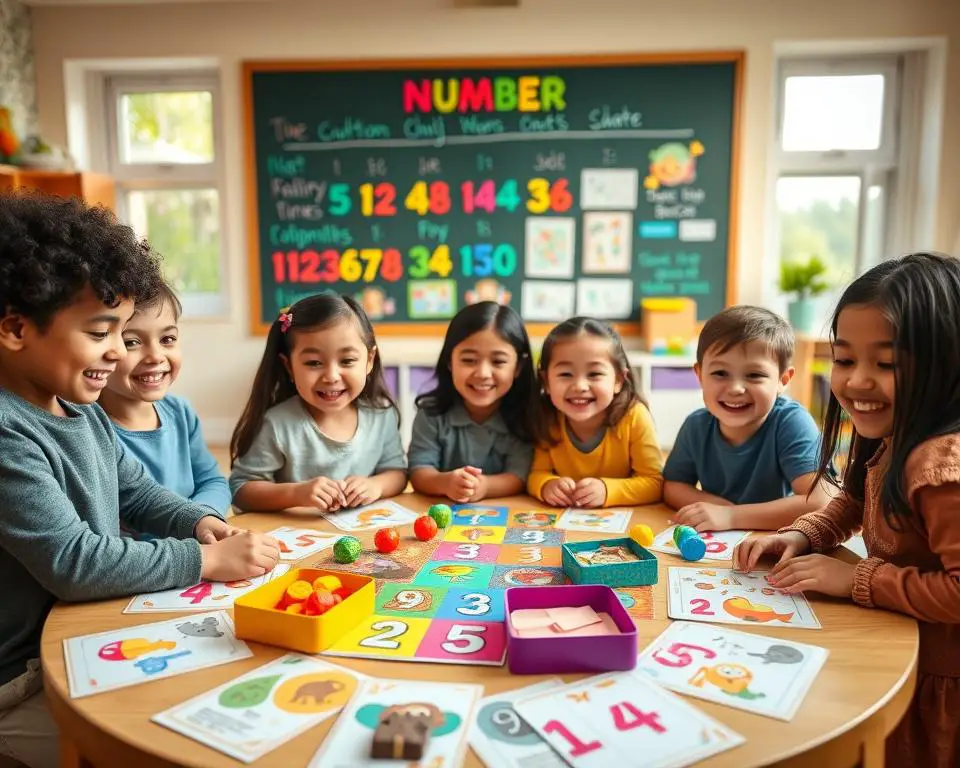
Interactive Mini-Games
Mini-games are great for practicing numbers. Kids can play games where they match numbers to pictures. Games like “Number Bingo” and “Counting Puzzles” make learning fun and interactive.
Resources for Numbers in English for Kids Worksheet
Having many tools can really help kids learn. There are free children’s worksheets and fun printable games. These resources are key for good learning.
K5 Learning Free and Paid Worksheets
K5 Learning has lots of resources for kids. They offer free worksheets and premium ones too. Their materials are made for different learning needs. They help kids understand numbers well.
Printable ESL Flashcards and Games
Printable ESL flashcards and games are great for learning. Flashcards help kids remember numbers better. Games make learning fun and interactive.
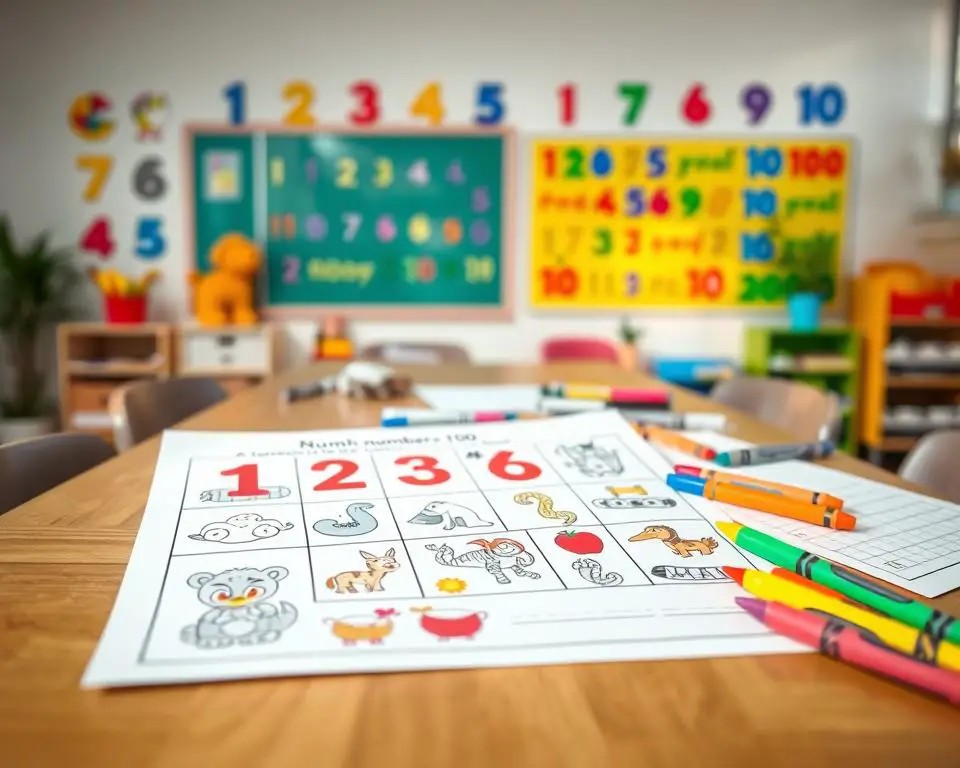
Teaching Numbers with Vocabulary Games
Using vocabulary games in education makes learning numbers fun for kids. Vocabulary games tap into children’s love for play, improving their learning skills. For example, dominoes can be turned into a game to learn numbers. Each domino has numbers and words, helping kids match them right.
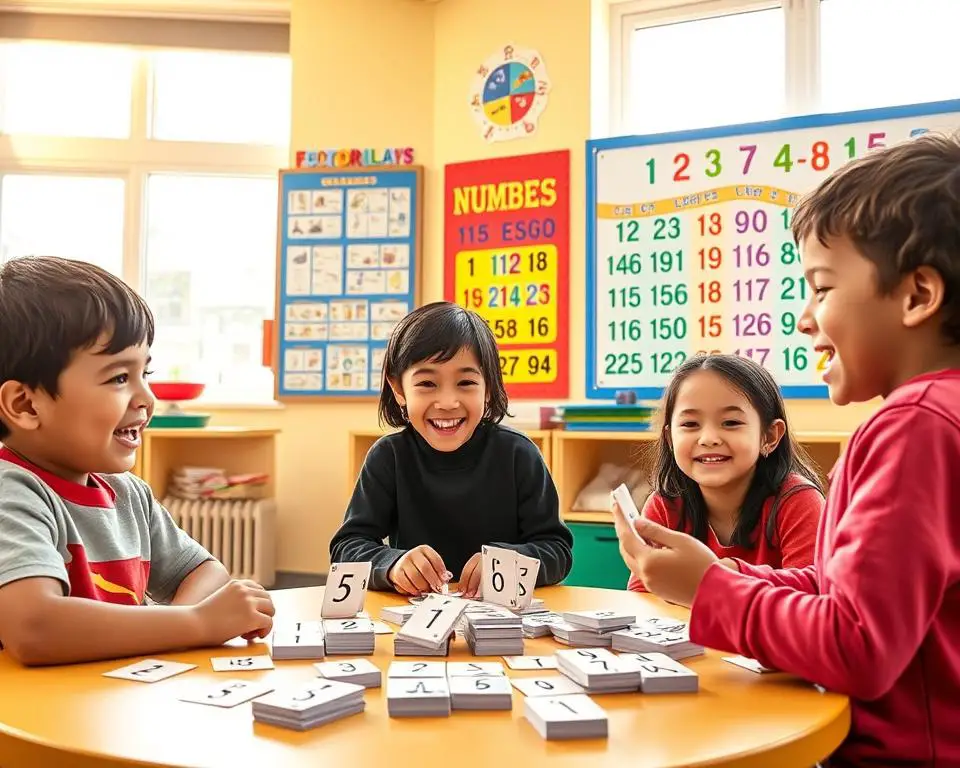
Fidget spinner games are another great option. Write numbers and words on the spinner’s edges. When spun, kids say the number or word it lands on, improving their knowledge with each spin.
Let’s look at how different number games help with learning:
| Game | Skill Enhanced | Engagement Level |
|---|---|---|
| Dominoes | Number Recognition | High |
| Fidget Spinner | Speed and Accuracy | Medium |
These educational strategies make learning fun and effective. Number games mix fun with learning, making education enjoyable and impactful.
Creating a Learning Environment at Home
Setting up a home learning environment is key for educational support at home. It helps kids learn more outside of school. The goal is to make a space that’s both neat and welcoming for engaging children in learning.
Start by picking a special spot in your home for learning. It should be bright, quiet, and free from distractions. Fill it with books, worksheets, and games that we talked about before.
To keep things interesting, add colorful charts, flashcards, and hands-on activities. These make learning fun and engaging in your home learning environment.
Having a daily routine is also important. Set times for reading, writing, and playing educational games. A schedule teaches kids the value of learning and helps them stay disciplined.
Let kids help set up their learning space. Letting them choose their favorite materials makes them more excited to learn. It’s a great way to engage children in learning and make them feel part of their education.
Finally, always offer educational support at home. Check on their progress, give positive feedback, and help when they need it. This makes their learning experience better.
Using Technology to Supplement Learning
Technology in education brings big benefits. It makes learning fun and interactive. Let’s explore some cool digital tools and platforms that make learning exciting for kids.
Digital Worksheets and Apps
Digital worksheets and apps are great for learning. Sites like ABCmouse and Khan Academy use *educational technology* to create lessons for each student. They make learning numbers fun and track progress to help improve.

Online Interactive Games
Online games are great for keeping kids interested. Sites like PBS Kids and Funbrain have lots of *interactive educational apps*. They use *digital learning tools* to make learning numbers fun with puzzles and quizzes.
These *educational technology* tools help make learning a fun adventure. They make learning numbers exciting for kids.
Incorporating Numbers into Daily Activities
Teaching kids about numbers can be fun and effective. By making math a part of daily life, parents and teachers can help kids love numbers. This approach makes learning exciting and engaging.
Counting Objects Around the House
Counting things at home is a great way to learn numbers. Kids can count toys, fruits, or even steps. It’s a fun way to understand numbers and quantity.
While cooking, kids can count ingredients or pieces of cutlery. These moments make math real and easy to understand. It’s a great way to learn through everyday activities.
Playing Number-Based Board Games
Playing number-based board games is another great way to learn math. Games like Monopoly or Chutes and Ladders teach counting and strategy. They also make learning fun.
These games are perfect for family time. They help kids see math as a fun and important skill. It’s a great way to bond and learn together.
By making numbers a part of daily life, kids learn in a fun and structured way. They become more confident and excited about math.
Remember, math can be learned through everyday activities. It’s all about making learning a part of daily life.
Tips for Parents and Teachers
Parents and teachers are key in a child’s learning journey. They need to use good teaching methods and support well. Here are some educational tips for setting goals, tracking progress, and using positive reinforcement.
Setting Goals and Tracking Progress
Setting clear goals is vital for guiding kids in their learning. A plan keeps them focused and shows them the way to success.
- Define short-term and long-term goals that fit the child’s age and skill level.
- Use visual charts to track progress, keeping kids engaged and motivated.
- Regularly review and adjust goals based on ongoing performance assessments.
Tracking progress shows what needs work and celebrates successes. This encourages kids to keep learning.
Positive Reinforcement Techniques
Positive reinforcement builds confidence and a love for learning. Here are some teaching strategies to try:
- Give praise and rewards for reaching milestones, no matter how small.
- Create a system of incentives to keep interest and enthusiasm high.
- Encourage self-assessment to develop critical thinking and self-evaluation skills.
In conclusion, these parent guide to teaching numbers tips help create a supportive learning environment. By setting goals, tracking progress, and using positive reinforcement, educators and parents can greatly improve kids’ confidence and academic success.
Conclusion
As we wrap up our exploration of teaching numbers to kids, let’s reflect on what we’ve learned. We’ve seen how using worksheets, games, and activities can make learning fun and effective. This recap shows how important it is to mix these elements into your teaching plan.
Using tools like K5 Learning resources and ESL flashcards helps build a strong base. It boosts kids’ thinking skills and keeps them engaged. Also, teaching numbers in everyday life and creating a supportive home environment are key to a well-rounded education.
In our last thoughts, we see that blending tech with traditional methods is a great way to teach kids. Digital tools, apps, and games make learning exciting and keep kids interested. The aim is to give kids a solid foundation in numbers, preparing them for future success.